
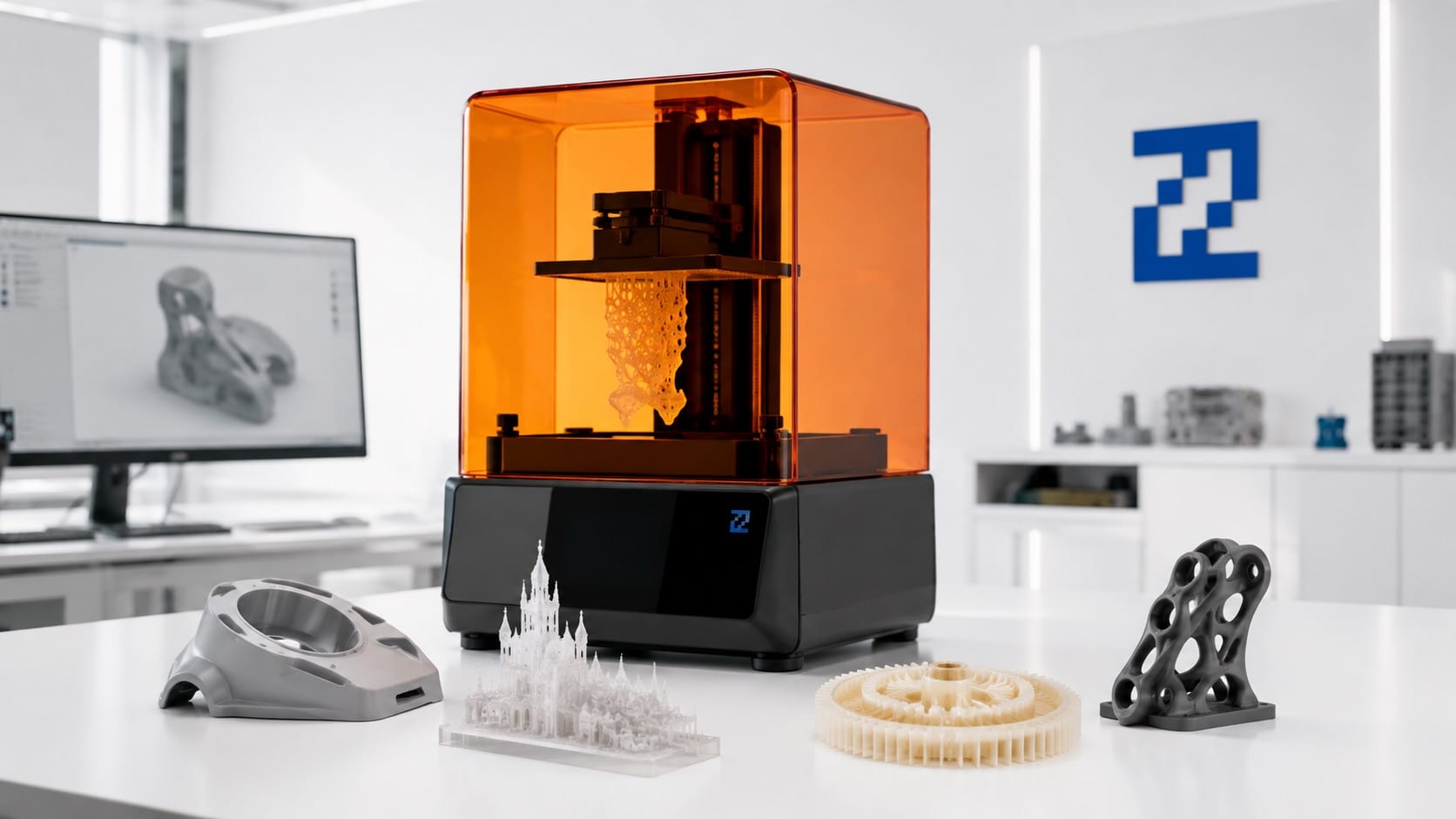
SLA Printing
Stereolithography works by curing liquid resin with light, layer by layer. It's preferred for visual models and precision parts that need fine detail resolution and a smooth surface finish, complementing MJF, our area of expertise for functional production, in exactly that niche.
Let's talk about your project. Send your part or your parts list; we'll come back with scope and lead time within 24 hours, most often the same business day.
Get a quote for SLA PrintingFine detail resolution
Light-cured resin resolves detail below a millimeter with genuine sharpness.
Smooth surfaces
Surfaces leave the machine with layer lines that are all but invisible.
Presentation quality
The right tool for showing a design's final form in hand and presenting it.
We know its limits
Standard resins are brittle, so for load-bearing parts we point you to MJF.
How SLA works
The build platform is lowered into a vat of liquid photopolymer resin. A light source traces the part's cross-section and only the illuminated areas solidify; the platform steps down one layer, fresh resin flows in and the cycle repeats. After printing the part is washed, supports are removed and a final UV cure is applied; those steps largely set the final properties.
When is it the right choice?
We recommend SLA for visual models, presentation prototypes and work where a smooth surface is the function itself. It's the right tool for showing a design's final form in hand. Standard resins, however, are more brittle than thermoplastics and can degrade under prolonged UV exposure, so for load-bearing functional parts we point you to MJF with PA12.