MJF Printing
How does Multi Jet Fusion work?
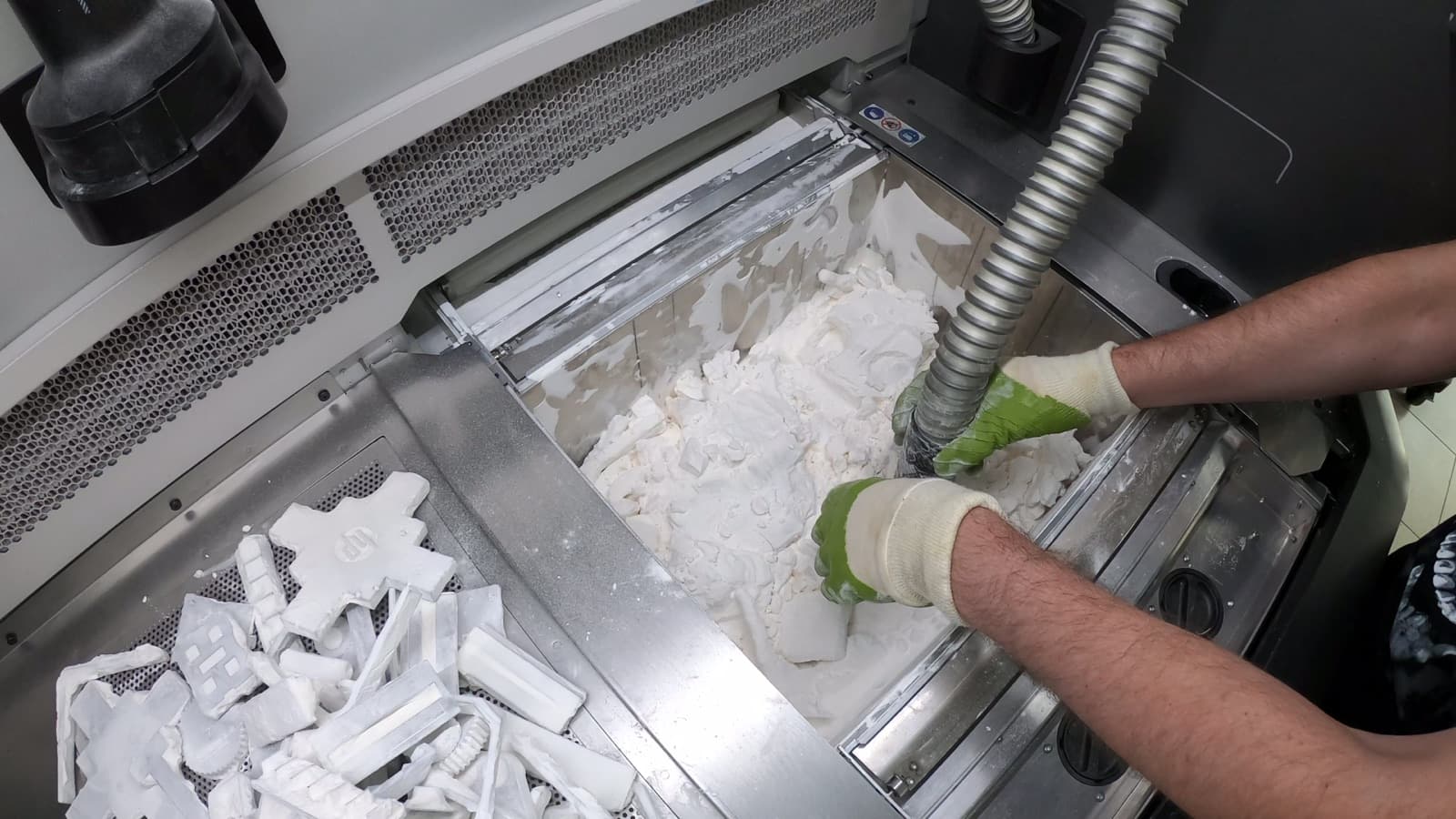
MJF builds parts layer by layer from fine polyamide powder. No support structures are needed; the unfused powder in the chamber carries the part throughout the build.
A powder layer is spread
The chamber is heated
Fusing and detailing agents are jetted
Infrared energy fuses the powder
The build platform lowers one layer
Repeats until the part is done
The result: high-density parts, close to isotropic, that come out the same every time.
Let's talk about your project. Send your part or your parts list; we'll come back with scope and lead time within 24 hours, most often the same business day.
Get a quote for MJF PrintingNo support structures
The powder bed carries the part, so complex geometries print without support marks.
PA12 nylon
Balanced strength, flexibility and chemical resistance make it the industry standard.
Consistent strength
Parts behave the same whichever way they are loaded, so orientation is not a risk.
Ready for series
The part you validated as a prototype scales to hundreds through the same process.
When is it the right choice?
- Functional prototypes Parts that will be tested, assembled and loaded.
- End-use parts Components that stay inside the product and go out to the field.
- Low and mid-volume series Work that cannot justify a tooling investment.
- Complex internal geometries Channels and cavities that machining cannot reach.
- Single-piece designs Solutions that merge several parts into one body and cut assembly.
Compared with injection molding, tooling cost and lead time disappear; changing the design just means updating the file.
Material: PA12
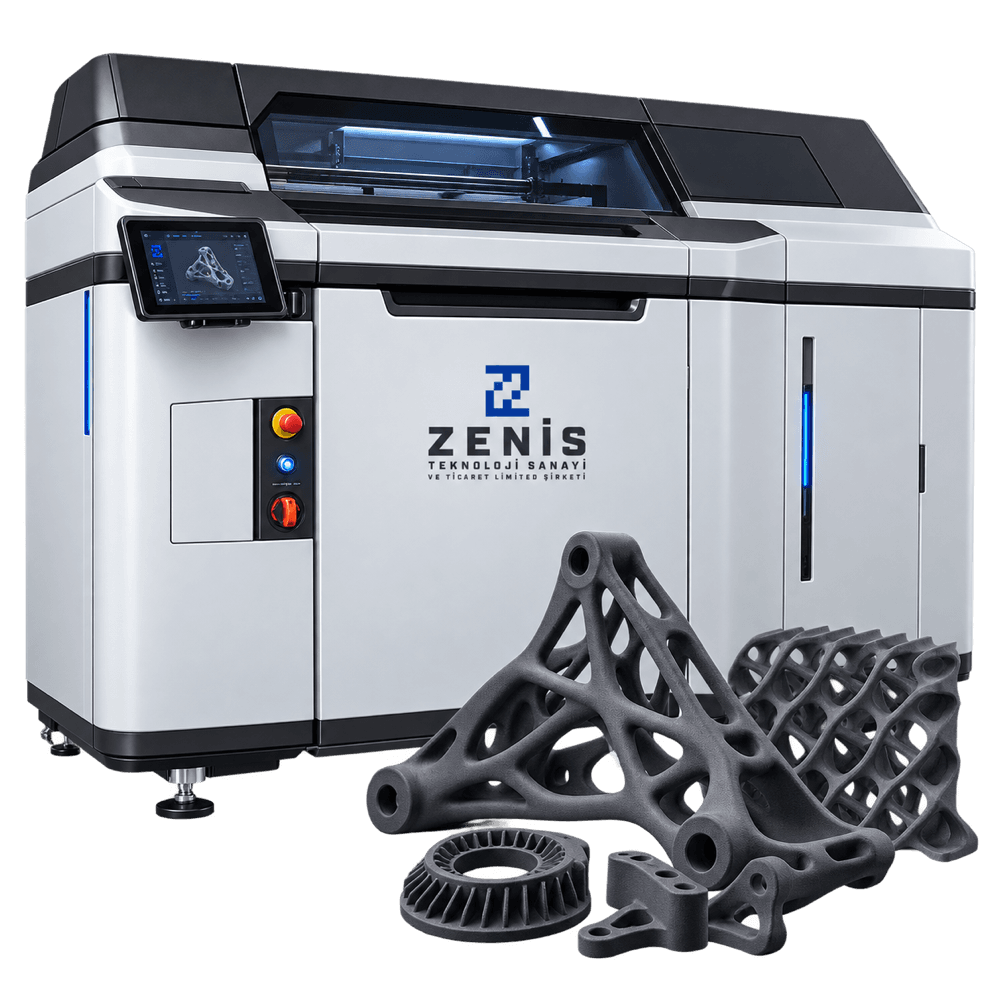
PA12 (polyamide 12) is the default material of industrial additive manufacturing. We produce the vast majority of parts with it.
| PROPERTY | XY | Z |
|---|---|---|
| Tensile strength | 54 MPa | 54 MPa |
| Elongation at break | 18% | 10% |
| Tensile modulus | 2150 MPa | 2150 MPa |
| Flexural strength (5% strain) | 63 MPa | 68 MPa |
| Izod impact (notched, 3.2 mm) | 4.5 kJ/m² | 4.4 kJ/m² |
| Heat deflection temperature (1.82 MPa) | 108 °C | 104 °C |
| Continuous service temperature (UL RTI) | 65 °C | |
| Hardness (Shore D) | 73 | |
| Density | 1.02 g/cm³ | |
| Surface roughness (Sa) | 9 to 12 µm | |
| Flammability rating | UL-94 HB | |
Material: HP 3D HR PA12, Evonik — average values for the HP Jet Fusion 5600 Series. For 95% of parts, tensile strength stays within 50–56 MPa and tensile modulus within 2000–2300 MPa. Values are for reference and vary with part geometry, build placement and machine configuration.
Strength versus temperature. Strength falls off quickly with temperature: 36 MPa at 55 °C and 27 MPa at 90 °C. For parts under continuous load, treat 65 °C as the limit.
We currently produce in PA12. If you need a different material, let's look at your project together.
Get a Quote