
FDM Printing
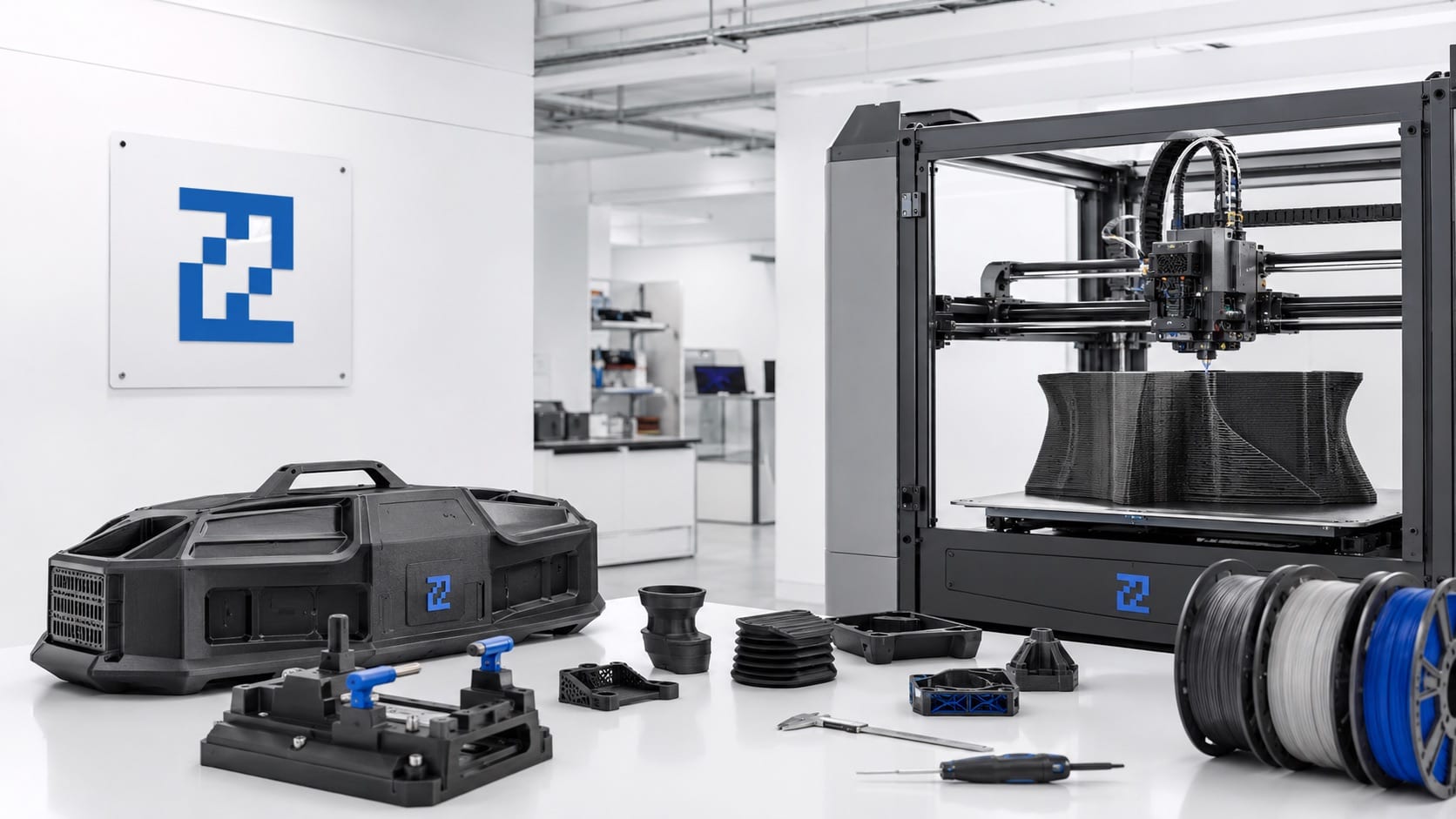
Fused Deposition Modeling builds parts by depositing thermoplastic filament layer by layer. It's a complementary technology suited to large-volume parts, production jigs and budget-driven work, playing that role alongside MJF, our core production line.
Let's talk about your project. Send your part or your parts list; we'll come back with scope and lead time within 24 hours, most often the same business day.
Get a quote for FDM PrintingLarge part capacity
Bodies that outgrow a powder bed chamber can still be printed in a single piece.
Wide material range
From PLA to engineering filaments, material is chosen to suit the job at hand.
Cost advantage
For short-lived production aids the cost balance usually lands in FDM's favor.
A complementary role
MJF stays our core process for functional series work; FDM sits alongside it.
How FDM works
Thermoplastic filament is melted through a heated nozzle, and the print head deposits material layer by layer, tracing the part's cross-section. Each layer fuses to the one below as it cools; the platform steps down and the cycle repeats. Overhanging geometry needs support structures during the build, which are removed in post-processing. The method's real strength is scale and material variety: large bodies can be built as a single piece at reasonable cost, with a wide range of thermoplastics to choose from.
When is it the right choice?
We recommend FDM for large single-body parts, benchtop jigs and early-stage prototypes where budget decides. Bodies that outgrow a powder-bed chamber can be printed in one piece. To be straightforward: for functional series work and end-use parts that need consistent mechanical properties, we'll steer you to MJF; layer lines and direction-dependent strength are inherent to FDM.